Standing Tall: How Hollywood Finally Stopped Being Weird About Height
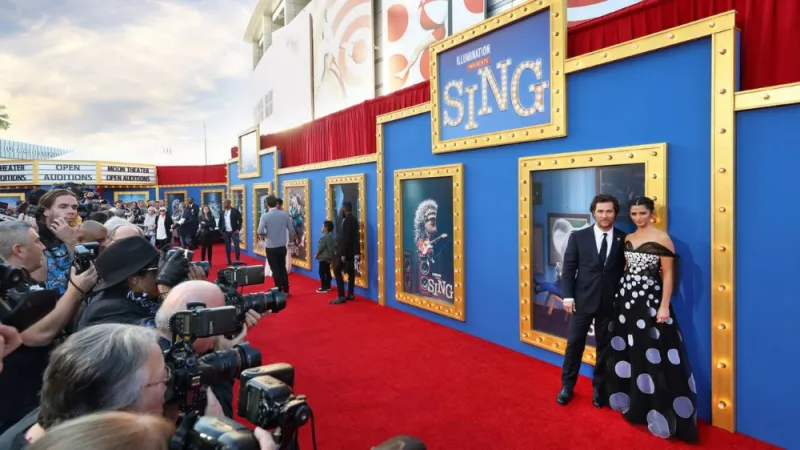
Photo: tall actor Hollywood film set red carpet premiere, via i.pinimg.com
Let's be honest — Hollywood has always had a complicated relationship with height. For most of its history, the industry operated on an unspoken rule: leading men should hover around 5'10", leading ladies should be petite enough to look "delicate" on screen, and anyone who towered over that invisible ceiling was quietly steered toward villains, comic relief, or background work. It was one of those open secrets that nobody really talked about, but everybody in the industry knew.
That era? It's crumbling. Fast.
The Old Playbook Is Dead
For years, casting orthodoxy held that taller performers created "frame problems" — they were harder to shoot alongside shorter co-stars, they supposedly dominated scenes in ways that threw off chemistry, and they disrupted the carefully calibrated visual language directors had been using since the silent film era. Studios would request that tall actors wear flat shoes, crouch slightly, or be shot from angles that minimized their stature. Some performers famously stood in trenches during filming just so their co-stars could appear equal in height.
It sounds absurd when you say it out loud in 2024. And increasingly, the industry agrees.
The shift didn't happen overnight. It came gradually, pushed along by a generation of performers who refused to shrink — literally or figuratively — and by a wave of filmmakers who decided that authenticity mattered more than conforming to old visual conventions.
Streaming Changed Everything
You can't talk about this transformation without crediting the streaming revolution. When Netflix, HBO Max, Hulu, and their competitors started greenlit content at a pace traditional studios never could, the demand for fresh faces exploded. Casting nets went wider. The old gatekeeping structures that had quietly enforced height norms for decades became harder to maintain when you needed to fill out ten new prestige dramas per quarter.
Streaming also changed how audiences watch. On a 65-inch TV from eight feet away, the subtle height differentials that used to worry cinematographers just... matter less. The intimacy of the medium — the way streaming content is consumed in bedrooms and living rooms rather than massive theatrical auditoriums — shifted the visual grammar of performance. Presence, emotional range, and charisma started outpacing the old physical checklists.
Casting directors noticed. Several industry professionals, speaking at panels and in trade interviews over the past couple of years, have openly acknowledged that the streaming boom forced a recalibration of what "leading role material" actually looks like.
The Names Changing the Game
You don't have to look hard to find the proof. Some of the most bankable, critically celebrated performers working right now defy the old height conventions — and they're not being cast despite their stature. In many cases, their physicality is part of what makes them compelling.
Timothée Chalamet, at a lean 5'10" on a good day, isn't exactly a giant — but his willowy frame and unconventional proportions made him the perfect choice to anchor Dune, a franchise built around otherworldly physical presence. His height became a visual asset, not an obstacle.
Anya Taylor-Joy, whose striking features are amplified by her tall, angular frame, has become one of the most sought-after actresses of her generation. Her physicality is central to her on-screen identity — it's part of what makes her so arresting in everything from The Queen's Gambit to Furiosa.
Oscar Isaac, meanwhile, has built a career on intensity and versatility that completely sidesteps the old height conversation. His casting in Moon Knight and across the Star Wars universe proves that when a performer commands a frame with genuine magnetism, the measuring tape becomes irrelevant.
Cinematography Caught Up, Too
Beyond casting culture, the technical side of filmmaking has evolved in ways that make height less of a logistical headache than it once was. Modern digital cameras are more flexible. Lens technology has advanced. Directors of photography have developed new approaches to blocking and framing that accommodate a wider range of body types without the visual awkwardness that used to plague productions featuring height-mismatched co-stars.
The days of shooting every two-shot from a carefully calibrated "neutral" angle to hide a foot-tall height difference are giving way to filmmakers who simply... lean into the contrast. Some directors are actively using height differentials as a storytelling tool — a visual shorthand for power dynamics, vulnerability, or physical distinctiveness that adds texture rather than distraction.
What's Actually Driving the Change?
Beyond technology and market forces, there's a cultural component that's hard to ignore. Audiences have grown more attuned to authenticity. The parasocial relationship between fans and performers — fueled by social media, behind-the-scenes content, and the general collapse of the old Hollywood mystique — means that viewers know what actors actually look like. Trying to hide or minimize someone's real physicality feels increasingly dishonest, and audiences can smell that inauthenticity from a mile away.
There's also been a broader cultural reckoning with the kinds of bodies Hollywood has historically celebrated and marginalized. Height discrimination isn't the loudest conversation in that space, but it's part of it — and as the industry has been pushed to interrogate other forms of physical bias, the height question has quietly gotten pulled into the current.
Still a Long Road
None of this means the playing field is perfectly level. Shorter actors still face documented challenges getting cast in certain roles, and the old hierarchies haven't vanished entirely. But the direction of travel is clear. The performers breaking through right now are doing it on the strength of their craft, their presence, and their willingness to own exactly who they are — height and all.
At TallDL, we've always believed that standing out beats blending in. Hollywood is slowly figuring out the same thing. And honestly? It looks good on them.