Why Your Hobbies Cost More When You're Built Like a Redwood
Let's say you're 6'4" and you've decided to finally get into hobbies. Good for you. Maybe you want to climb some walls at your local gym, catch a few concerts, take up cycling, or finally learn to golf properly. Reasonable stuff. Normal American leisure activity.
Except none of it was built for you. And the gap between what average-height people pay to enjoy these things and what tall people pay — in money, time, frustration, and outright exclusion — is wider than most people realize.
This is the tall tax on hobbies. It's real, it's annoying, and it touches pretty much every corner of recreational life in the US.
Rock Climbing: When the Wall Wasn't Designed With a Wingspan Like Yours in Mind
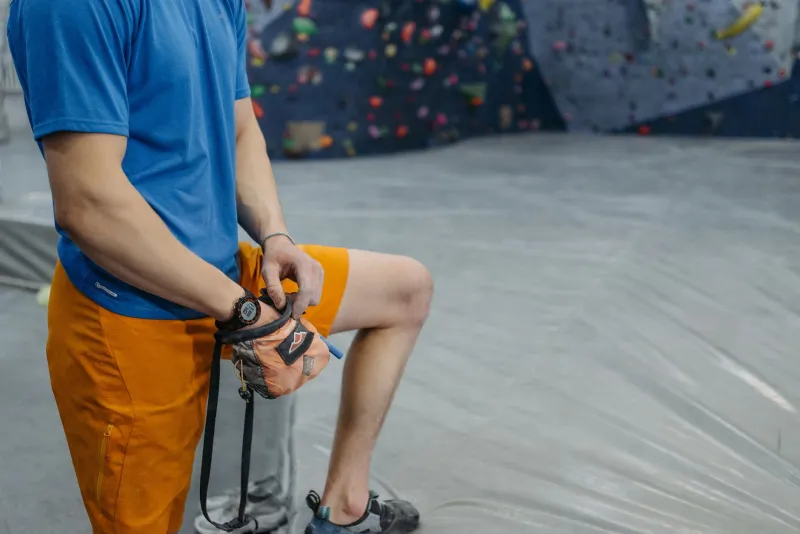
Indoor climbing has exploded in popularity over the last decade. There are now over 600 climbing gyms across the United States, and they're packed on weekends with people of all fitness levels. For tall climbers, though, the experience comes with some built-in complications.
Route setters at most gyms design problems for an assumed average height and reach. A move that's genuinely challenging for someone who's 5'9" might be trivially easy — or physically impossible — for someone who's 6'5". The reach between holds, the body positioning required, the intended sequence of moves — it all shifts when you add eight inches of height and proportionally longer limbs.
That's not necessarily a financial cost. But here's where it gets expensive: specialty climbing shoes. The big brands dominate the market with sizing that gets increasingly hard to find above a men's 13 or 14. Custom or extended sizing from smaller brands runs significantly higher than standard pairs — sometimes 30 to 50 percent more. Harnesses rated for taller torsos and longer legs also push into premium pricing territory. Add in the fact that tall climbers often wear through equipment faster due to frame mechanics, and the gear budget climbs fast (pun intended).
Concert Venues: Paying Full Price for Half the Experience
Here's a scenario that every tall person has lived at least once: you buy a general admission ticket for a concert, you show up excited, and you spend the entire night getting dirty looks from the people behind you because your head is blocking their view. You're not doing anything wrong. You're just standing there. But suddenly you're the villain of the evening.
The financial angle here is subtle but real. Tall concert-goers often feel pressure to buy seated tickets rather than GA floor tickets — not because they prefer sitting, but because standing in a crowd makes them a target for resentment. Seated tickets at major venues frequently cost more than GA. At a typical arena show, that difference can run anywhere from $20 to $80 per ticket depending on the event.
Multiply that across a year of concerts, and you're looking at a meaningful chunk of change spent specifically because your height makes the cheaper option socially uncomfortable. Some tall fans have started gravitating toward smaller, seated venues altogether, which limits their entertainment options and often means paying premium prices for boutique experiences.
Cycling: The Custom Frame Problem
Cycling is one of the most popular recreational activities in the US, with an estimated 50 million Americans riding regularly. It's also one of the most height-punishing hobbies on this list when you're above a certain threshold.
Standard bike sizing tops out at around an XL frame, which typically fits riders up to about 6'2" or 6'3" comfortably. Above that, you're in custom or semi-custom territory. A quality off-the-shelf road bike might run $1,200 to $2,500. A custom-built frame for someone who's 6'5" or taller? You're often starting at $3,000 and heading upward from there, before you've added components.
Mountain biking has a similar issue. Trail geometry designed for average-height riders means that taller cyclists often struggle with handling characteristics that feel off — not dangerously so, but enough to affect performance and enjoyment. The workaround involves swapping stems, adjusting cockpit length, and sometimes replacing the frame entirely. Each fix costs money.
Tall cyclists in online communities have developed elaborate spreadsheets and sizing guides to help each other navigate the market. It's genuinely impressive grassroots problem-solving. It's also a sign of how thoroughly the industry has failed to design for them in the first place.
Golf: Where "Standard" Is a Polite Fiction
Golf equipment is sold as customizable, and technically it is — for an upcharge. Standard club lengths are built around a player who's roughly 5'9" to 6'1". If you're taller than that, you need extended shafts, which means either buying custom clubs from the start or paying a fitting and modification fee on top of a standard set.
At entry level, this might add $50 to $150 to your setup. At the mid-to-high end of the market, where serious recreational golfers shop, the premium for properly fitted clubs for a 6'4" player can run several hundred dollars beyond what their average-height playing partners pay for equivalent equipment. Over a lifetime of replacing clubs as your game and budget grow, that gap compounds significantly.
And that's before you factor in the fitting sessions themselves, which typically cost $100 to $300 at a proper fitting studio — something tall golfers essentially cannot skip if they want equipment that actually works for their body.
The Workarounds Tall Hobbyists Actually Use
Tall people are, out of necessity, creative. Across forums, subreddits, and niche Facebook groups, communities of tall enthusiasts have built informal knowledge bases around navigating hobbies that weren't designed for them.
For cycling, there are dedicated tall bike communities that catalog which manufacturers build the largest frames and which component combinations work best for extended reach. For golf, tall players share fitting recommendations and flag which brands are most accommodating without massive upcharges. Concert-goers swap tips on venues with genuinely good sightlines from the back and which GA pits have raised platforms.
These communities are genuinely useful — and they're a reminder that the tall tax on hobbies isn't just a financial issue. It's a time and energy tax too. The research burden of figuring out how to participate in normal recreational activities falls entirely on tall people, while average-height hobbyists just... buy the thing and do the thing.
The Bottom Line
Hobbies are supposed to be where you decompress. They're supposed to be the uncomplicated part of life. For tall Americans, though, that simplicity comes at a premium — whether it's custom gear, upgraded seating, or the hours spent figuring out how to make standard equipment work for a non-standard frame.
The good news is that awareness is slowly building. More brands are expanding their size ranges. More venues are experimenting with better sightline design. And the communities tall hobbyists have built for themselves are genuinely excellent resources.
But until the recreational industry catches up to the actual range of human body sizes, tall people are going to keep paying extra just to have fun. And that's worth calling out.